Terracycle up-cycles waste products like yogurt containers and candy wrappers. The company got its start bottling worm poo fertilizer in used soda bottles. It now partners with companies like Stoneyfield Yogurt and Mars, Inc. on recycling low grade materials into new consumer products. The end products range from flower pots to binders and can be found at major retailers like Wal-Mart and Office Max.
The process Terracycle uses is a bit more complicated than traditional recycling. Groups known as ‘brigades’ focus on collecting one item for recycling – say Stoneyfield yogurt containers. Terracycle sends the brigade 4 boxes to fill with yogurt cups. Once they have 4,000 cups the brigade drops off the boxes at a UPS site with shipping paid by Terracycle. Each cup earns between 2 and 5 cents for a charity or school chosen by the brigade. While it may seem unrealistic for an individual to collect 4,000 yogurt containers this is a great project for a school or office to take on. Right now the yogurt cups are being transformed, with just some paint, into planting pots to be sold by U.S. retailers that currently use black plastic pots.
Signing up for the Candy Wrapper Brigade or the Cookie Wrapper Brigade seems like it would make anyone’s inner child whip out a cape with a candy wrapper emblem and a wooden sword. Time to fight the unnecessary waste!
Elizabeth Ulion is a graduate student at Northwestern University. She has begun designing her cookie wrapper cape. It will be purple.
In 2007 Google began its alternative energy research effort, RE<C (renewable energy less than coal). The company pledged millions of dollars through Google.org to make electricity from renewable energy cheaper than electricity from coal. A list of grants and investments shows that money has gone to Enhanced Geothermal Systems, solar thermal, and high-altitude wind power.
But are they really doing any good?
“Google is filling a gap in other funding sources, particularly today,” said Glenn Croston, founder of Starting Up Green. “And I think that while they are not the only ones getting involved in the pursuit of clean energy, particularly with massive government efforts getting underway, they are influential.”
Google’s sister energy programs invest in other branches of the energy future including transportation alternatives and household conservation.. RechargeIT has created a fleet of plug-in hybrids at Google’s headquarters and made investments to organizations working on getting electric cars on the roads. Google PowerMeter is an application that appears right on a users iGoogle homepage and tracks household energy use showing consumers what appliances use more energy and where they can save. (This does look really cool!)
“From what I’ve seen their pursuits may have seemed out there not long ago but they are right on track for where things are headed, with clean energy a major economic opportunity this century, starting today,” Croston said.
While there hasn’t been much mention of Google’s energy efforts in the news these days their Web site highlights a lot of organizations that have received Google.org monies and are hopefully hard at work on world saving technologies of the future!
Elizabeth Ulion is a graduate student at Northwestern University.
On July 10 G8 leaders allotted $20 billion for farm aid in developing countries to combat hunger. The same week they came to a soft agreement to cut greenhouse gas emissions but left out any financial, regulatory and technological plan to make it happen.
I’m confused.
Agriculture faces an uncertain future with climate change
The International Panel on Climate Change predicted in a 2007 report:
“If temperatures rise more than 2.5 degrees C, the report forsees major changes in ecosystem structure and function, species’ ecological interactions, and species’ geographic ranges, with “predominantly negative consequences” for biodiversity, and water and food supply.”
While they found that crop productivity may slightly increase in certain areas if temperatures rise 1 to 3 degrees C, productivity will decrease beyond that. In other areas like tropical regions crop productivity is expected to decrease even with small temperature increases. Paired with drought, the spread of pests and extreme weather events the future of agriculture in places where its expansion is needed most looks perilous.
So while $20 billion dollars for the education of farmers in sustainable agriculture techniques is an amazing investment it won’t do much good on soil cracked from drought and crops decimated by invasive insects.
Maybe what the U.S. could bring to the table in these discussions is a bit of our environmental history. One of the most influential naturalists, John Muir, said,“When we try to pick out anything by itself, we find it hitched to everything else in the universe.”
Hunger, health, poverty, agriculture, biodiversity, economics, climate change – none of these are in a world apart. Let’s stop acting like they are.
Elizabeth Ulion is a graduate student at Northwestern University. She found reading up on global climate change politics incredibly depressing.
SocialYell was featured in the May 2009 “10 Ways” post and we are excited to be part of the Social Good movement!
Social media is about connecting people and providing the tools necessary to have a conversation. That global conversation is an extremely powerful platform for spreading information and awareness about social causes and issues. That’s one of the reasons charities can benefit so greatly from being active on social media channels. But you can also do a lot to help your favorite charity or causes you are passionate about through social media.
Below is a list of 10 ways you can use social media to show your support for issues that are important to you. If you can think of any other ways to help charities via social web tools, please add them in the comments. If you’d like to retweet this post or take the conversation to Twitter or FriendFeed, please use the hashtag #10Ways.
1. Write a Blog Post
Blogging is one of the easiest ways you can help a charity or cause you feel passionate about. Almost everyone has an outlet for blogging these days — whether that means a site running WordPress, an account at LiveJournal, or a blog on MySpace or Facebook. By writing about issues you’re passionate about, you’re helping to spread awareness among your social circle. Because your friends or readers already trust you, what you say is influential.
You should also consider taking part in Blog Action Day, a once a year event in which thousands of blogs pledge to write at least one post about a specific social cause (last year it was fighting poverty). Blog Action Day will be on October 15 this year.
2. Share Stories with Friends
Another way to spread awareness among your social graph is to share links to blog posts and news articles via sites like Twitter, Facebook, Delicious, Digg, and even through email. Your network of friends is likely interested in what you have to say, so you have influence wherever you’ve gathered a social network.
You’ll be doing charities you support a great service when you share links to their campaigns, or to articles about causes you care about.
3. Follow Charities on Social Networks
In addition to sharing links to articles about issues you come across, you should also follow charities you support on the social networks where they are active. By increasing the size of their social graph, you’re increasing the size of their reach. When your charities tweet or post information about a campaign or a cause, statistics or a link to a good article, consider retweeting that post on Twitter, liking it on Facebook, or blogging about it.
Following charities on social media sites is a great way to keep in the loop and get updates, and it’s a great way to help the charity increase its reach by spreading information to your friends and followers.
You can follow the Summer of Social Good Charities:
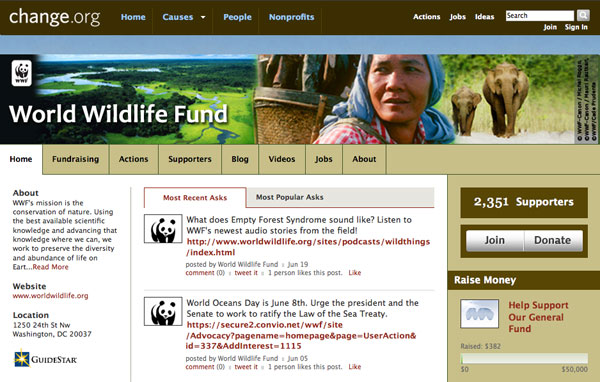
Another way you can show your support for the charities you care about is to rally around them on awareness hubs like Change.org, Care2, or the Facebook Causes application. These are social networks or applications specifically built with non-profits in mind. They offer special tools and opportunities for charities to spread awareness of issues, take action, and raise money.
It’s important to follow and support organizations on these sites because they’re another point of access for you to gather information about a charity or cause, and because by supporting your charity you’ll be increasing their overall reach. The more people they have following them and receiving their updates, the greater the chance that information they put out will spread virally.
5. Find Volunteer Opportunities
Using social media online can help connect you with volunteer opportunities offline, and according to web analytics firm Compete, traffic to volunteering sites is actually up sharply in 2009. Two of the biggest sites for locating volunteer opportunities are VolunteerMatch, which has almost 60,000 opportunities listed, and Idealist.org, which also lists paying jobs in the non-profit sector, in addition to maintaining databases of both volunteer jobs and willing volunteers.
For those who are interested in helping out when volunteers are urgently needed in crisis situations, check out HelpInDisaster.org, a site which helps register and educate those who want to help during disasters so that local resources are not tied up directing the calls of eager volunteers. Teenagers, meanwhile, should check out DoSomething.org, a site targeted at young adults seeking volunteer opportunities in their communities.
6. Embed a Widget on Your Site
Many charities offer embeddable widgets or badges that you can use on your social networking profiles or blogs to show your support. These badges generally serve one of two purposes (or both). They raise awareness of an issue and offer up a link or links to additional information. And very often they are used to raise money.
Mashable’s Summer of Social Good campaign, for example, has a widget that does both. The embeddable widget, which was custom built using Sprout (the creators of ChipIn), can both collect funds and offer information about the four charities the campaign supports.
7. Organize a Tweetup
You can use online social media tools to organize offline events, which are a great way to gather together like-minded people to raise awareness, raise money, or just discuss an issue that’s important to you. Getting people together offline to learn about an important issue can really kick start the conversation and make supporting the cause seem more real.
As mentioned, blog posts are great, but a picture really says a thousand words. The web has become a lot more visual in recent years and there are now a large number of social tools to help you express yourself using video. When you record a video plea or call to action about your issue or charity, you can make your message sound more authentic and real. You can use sites like 12seconds.tv, Vimeo, and YouTube to easily record and spread your video message.
Last week, the Summer of Social Good campaign encouraged people to use video to show support for charity. The #12forGood campaign challenged people to submit a 12 second video of themselves doing something for the Summer of Social Good. That could be anything, from singing a song to reciting a poem to just dancing around like a maniac — the idea was to use the power of video to spread awareness about the campaign and the charities it supports.
If you’re more into watching videos than recording them, Givzy.com enables you to raise funds for charities like Unicef and St. Jude’s Children’s Hospital by sharing viral videos by e-mail.
9. Sign or Start a Petition
There aren’t many more powerful ways to support a cause than to sign your name to a petition. Petitions spread awareness and, when successfully carried out, can demonstrate massive support for an issue. By making petitions viral, the social web has arguably made them even more powerful tools for social change. There are a large number of petition creation and hosting web sites out there. One of the biggest is The Petition Site, which is operated by the social awareness network Care2, or PetitionOnline.com, which has collected more than 79 million signatures over the years.
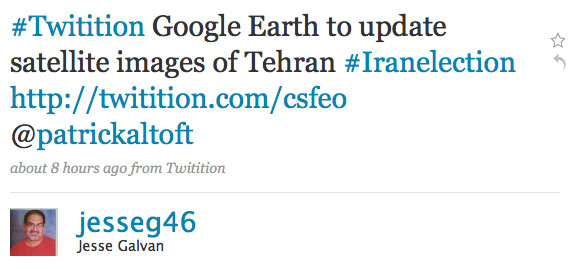
Petitions are extremely powerful, because they can strike a chord, spread virally, and serve as a visual demonstration of the support that an issue has gathered. Social media fans will want to check out a fairly new option for creating and spreading petitions: Twitition, an application that allows people to create, spread, and sign petitions via Twitter.
10. Organize an Online Event
Social media is a great way to organize offline, but you can also use online tools to organize effective online events. That can mean free form fund raising drives, like the Twitter-and-blog-powered campaign to raise money for a crisis center in Illinois last month that took in over $130,000 in just two weeks. Or it could mean an organized “tweet-a-thon” like the ones run by the 12for12k group, which aims to raise $12,000 each month for a different charity.
In March, 12for12k ran a 12-hour tweet-a-thon, in which any donation of at least $12 over a 12 hour period gained the person donating an entry into a drawing for prizes like an iPod Touch or a Nintendo Wii Fit. Last month, 12for12k took a different approach to an online event by holding a more ambitious 24-hour live video-a-thon, which included video interviews, music and sketch comedy performances, call-ins, and drawings for a large number of prizes given out to anyone who donated $12 or more.
Bonus: Think Outside the Box
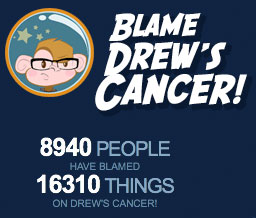
Social media provides almost limitless opportunity for being creative. You can think outside the box to come up with all sorts of innovative ways to raise money or awareness for a charity or cause. When Drew Olanoff was diagnosed with cancer, for example, he created Blame Drew’s Cancer, a campaign that encourages people to blow off steam by blaming his cancer for bad things in their lives using the Twitter hashtag #BlameDrewsCancer. Over 16,000 things have been blamed on Drew’s cancer, and he intends to find sponsors to turn those tweets into donations to LIVESTRONG once he beats the disease.
Or check out Nathan Winters, who is biking across the United States and documenting the entire trip using social media tools, in order to raise money and awareness for The Nature Conservancy.
The number of innovative things you can do using social media to support a charity or spread information about an issue is nearly endless. Can you think of any others? Please share them in the comments.
Special thanks to VPS.net
A special thanks to VPS.net, who are donating $100 to the Summer of Social Good for every signup they receive this week.
Sign up at VPS.net and use the coupon code “SOSG”to receive 3 Months of FREE hosting on top of your purchased term. VPS.net honors a 30 day no questions asked money back guarantee so there’s no risk.
About the “10 Ways” Series
The “10 Ways” Series was originated by Max Gladwell. This is the second simultaneous blog post in the series. The first ran on more than 80 blogs, including Mashable. Among other things, it is a social media experiment and the exploration of a new content distribution model. You can follow Max Gladwell on Twitter.

 The process Terracycle uses is a bit more complicated than traditional recycling. Groups known as ‘brigades’ focus on collecting one item for recycling – say Stoneyfield yogurt containers. Terracycle sends the brigade 4 boxes to fill with yogurt cups. Once they have 4,000 cups the brigade drops off the boxes at a UPS site with shipping paid by Terracycle. Each cup earns between 2 and 5 cents for a charity or school chosen by the brigade. While it may seem unrealistic for an individual to collect 4,000 yogurt containers this is a great project for a school or office to take on. Right now the yogurt cups are being transformed, with just some paint, into planting pots to be sold by U.S. retailers that currently use black plastic pots.
 “Google is filling a gap in other funding sources, particularly today,” said Glenn Croston, founder of




 Social media provides almost limitless opportunity for being creative. You can think outside the box to come up with all sorts of innovative ways to raise money or awareness for a charity or cause. When Drew Olanoff was diagnosed with cancer, for example, he created
 A special thanks to


